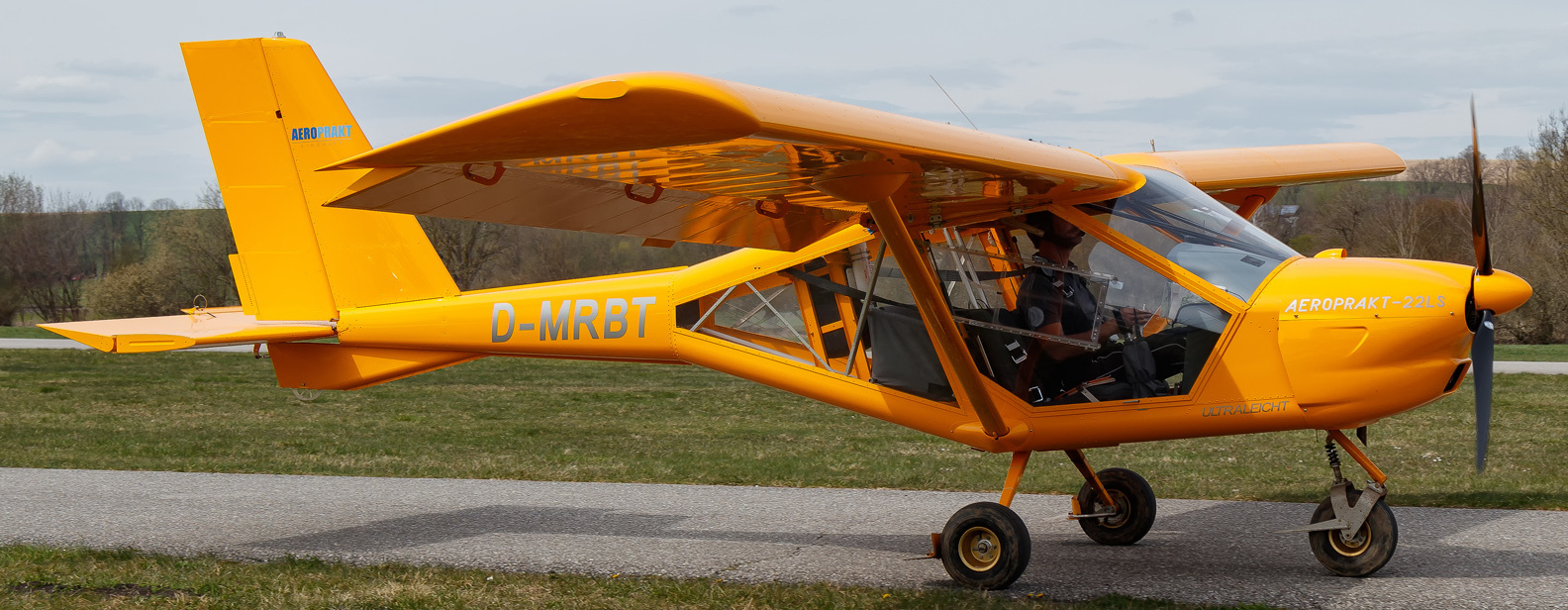
The border is not a line in the airspace but a change of rulebook. Much is harmonised at European level and carries over without problems – but precisely the things you trip over are regulated nationally. This page collects the questions, not the numbers.
Eight questions before crossing the border
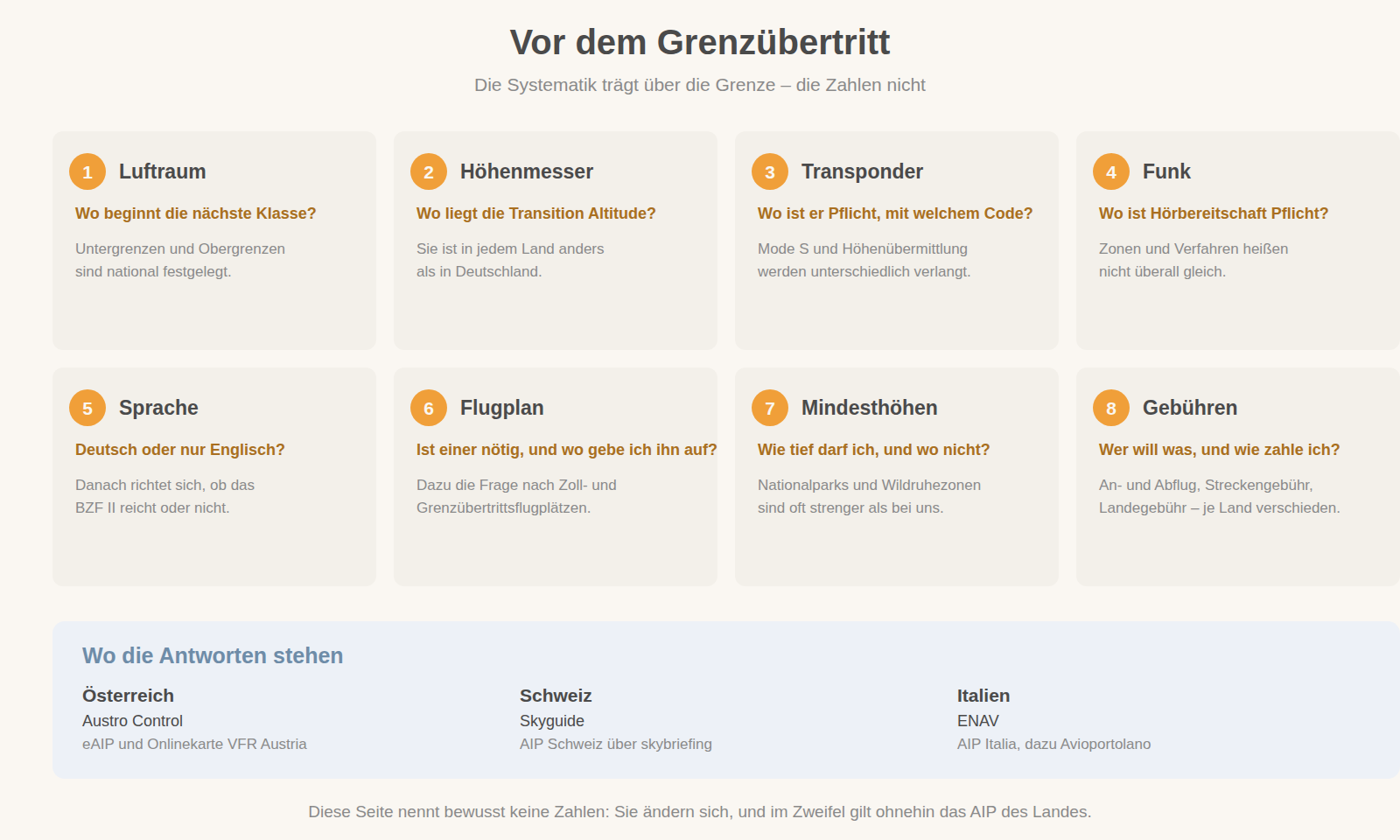
If you go through these eight points before the flight, you have the essentials together. They are deliberately phrased as questions: the answers are in the AIP of the country concerned and change there without this page noticing.
What is the same across Europe
The good news first: the system described on the previous pages still applies.
- Airspace classes A to G mean the same everywhere. What changes is only which class is where and from which altitude.
- 8.33 kHz channel spacing is the European standard. A radio that works in Germany works across the border too.
- The emergency frequency 121.500 and the transponder codes 7500, 7600 and 7700 are international. In an emergency you do not have to relearn anything.
- The structure of a radio call – whom, who, where, what – works the same in every language.
What remains national
And the rest does not. Airspace boundaries, transition altitude, transponder and radio requirements, the permitted language for radiotelephony, flight plan and reporting obligations when crossing the border, minimum heights over protected areas, fees: each state determines all of this itself. That is why there is no comparison table here. A number you remember from a website and apply two years later is more dangerous than none at all.
Where the answers are
- Austria – Austro Control: the eAIP and the online chart VFR Austria.
- Switzerland – Skyguide: the AIP Switzerland via skybriefing.
- Italy – ENAV: the AIP Italia, in practice supplemented by Avioportolano.
All three portals are linked on the Flight Planning page, together with the other AIS services.
We have since added Austria in full from the AIP: airspace structure, transition altitude, transponder, flight plan and the list of documents to carry for an ultralight are on a separate page, Austria: Airspace, Radio and Equipment. For Italy there are two pages: Italy: Airspace, Radio and Flight Plan for airspace, transponder requirements, radio and flight plan, and Italy: Flying an Ultralight for Italian ultralight law, landing sites and customs.
Austria: what is already settled
For the country we fly to most often, the radio part has already been clarified.
- The flight information service is called "Wien Information" – no longer divided regionally, similar to Langen Information here.
- Frequencies: Flight Information Centre 124.400 and 134.625 MHz, Terminal Flight Information 118.525 MHz.
- Transit through airspace C or D: you state your request on the initial call, but at the latest ten minutes before the planned entry. Wien Information then coordinates with the responsible air traffic control unit and hands you over to it before entry.
This is a noticeable difference from Germany: you do not call the control unit directly but go through the flight information service – and you need advance notice.
What this means for planning
- Answer the eight questions once per country, not per flight. Written down, the answers last a season.
- Clarify the language question first. It decides whether the BZF II is enough – and that cannot be made up on the day of the flight.
- Allow ten minutes' advance notice where transit is handled by the flight information service. If you only call at the airspace boundary, you stay outside.
- Update chart and database for the destination country, not only for Germany. An expired chart over unfamiliar terrain is the most unpleasant case.
- When in doubt, read the AIP, not the forum. Not this page either.
As of September 2026. This page deliberately gives no limits for other countries. The AIP of the respective state is binding; the information on Austria comes from Austro Control.
Remember
Across the border the system carries over, not the numbers. If you know which eight questions to ask, you will find the answers in twenty minutes – if you don't ask them, you only notice at the radio.