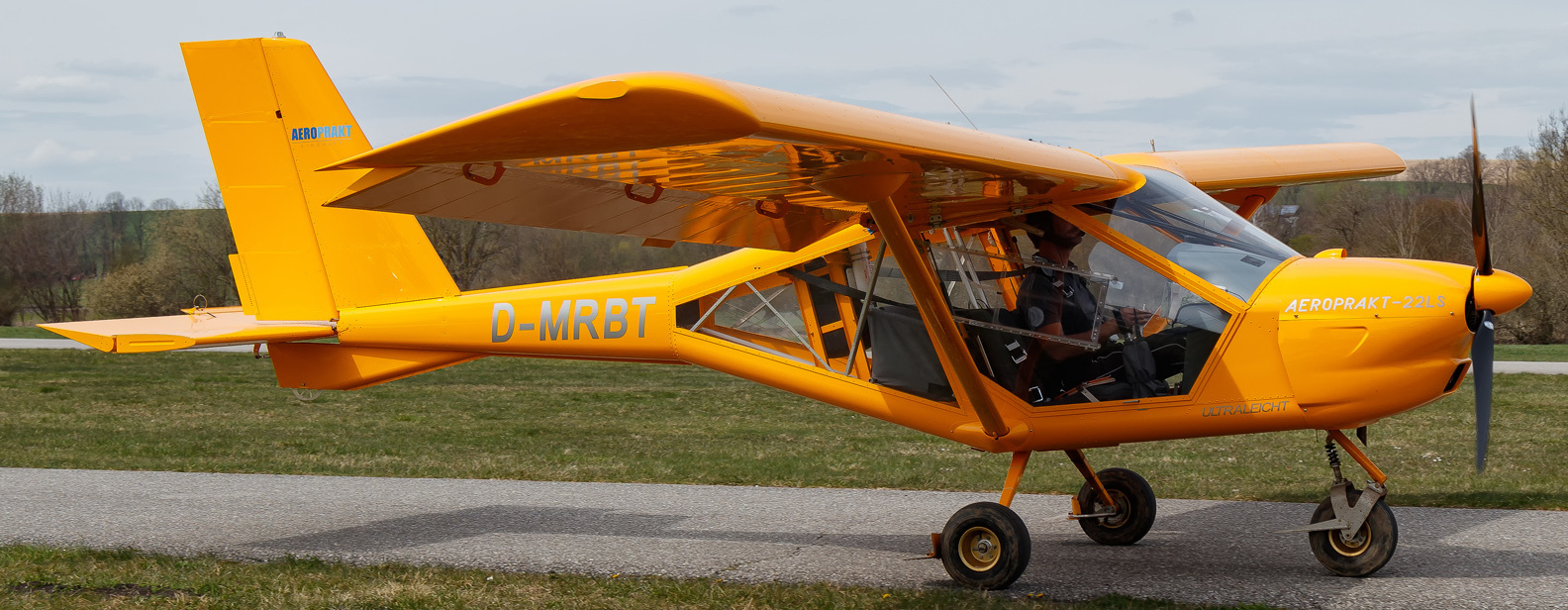
Using the radio takes two things: a licence that allows you the language, and a radio that can handle today's channel spacing. Both are quickly explained – and both are a prerequisite for switching the radio on at all.
The licence
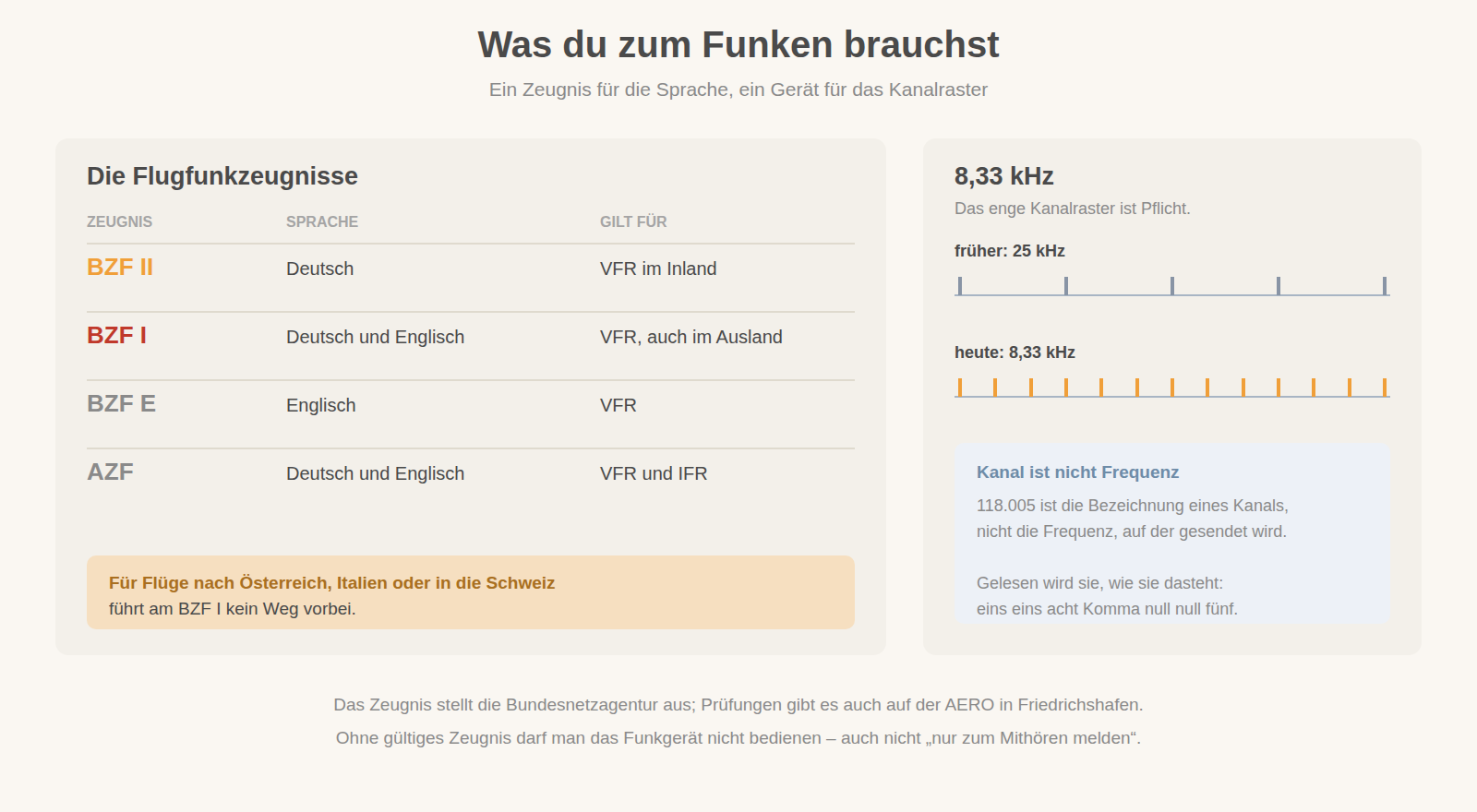
The Federal Network Agency (Bundesnetzagentur) issues the radiotelephony certificates. Two of them are relevant for VFR flying: the BZF II permits radiotelephony in German within Germany. The BZF I adds English – and with it everything beyond the border. There is also the English-language BZF E and the AZF, which additionally covers instrument flying.
For a flight in the Alpine foothills the BZF II is enough. Anyone who wants to fly to Austria, Italy or Switzerland cannot do without the BZF I – and once you have it, you never have to ask the question again.
Channel spacing
VHF aviation radio today works with 8.33 kHz channel spacing. The reason is banal: the band was full, and a finer spacing creates three times as many channels. For us this means the radio must be 8.33-capable – older sets with only 25 kHz spacing simply can no longer reach some stations.
The resulting numbers look unfamiliar. 118.005 is not a frequency value but a channel designator. It is spoken as written: one one eight decimal zero zero five. Trying to calculate a frequency from it only leads you astray.
What this means in practice
- No valid licence, no radio. Not even "just a quick report", and not in the circuit either.
- The BZF I pays off sooner than you think. The effort is manageable, and the Alpine countries begin an hour's flight to the south.
- Before buying a used radio, check for 8.33 kHz. A 25 kHz set today is electronic waste with a front panel.
- Read channel designators, do not convert them. What is on the chart is typed in and read out.
Remember
The licence governs the language, the radio the channel. If either is missing, the microphone stays put.