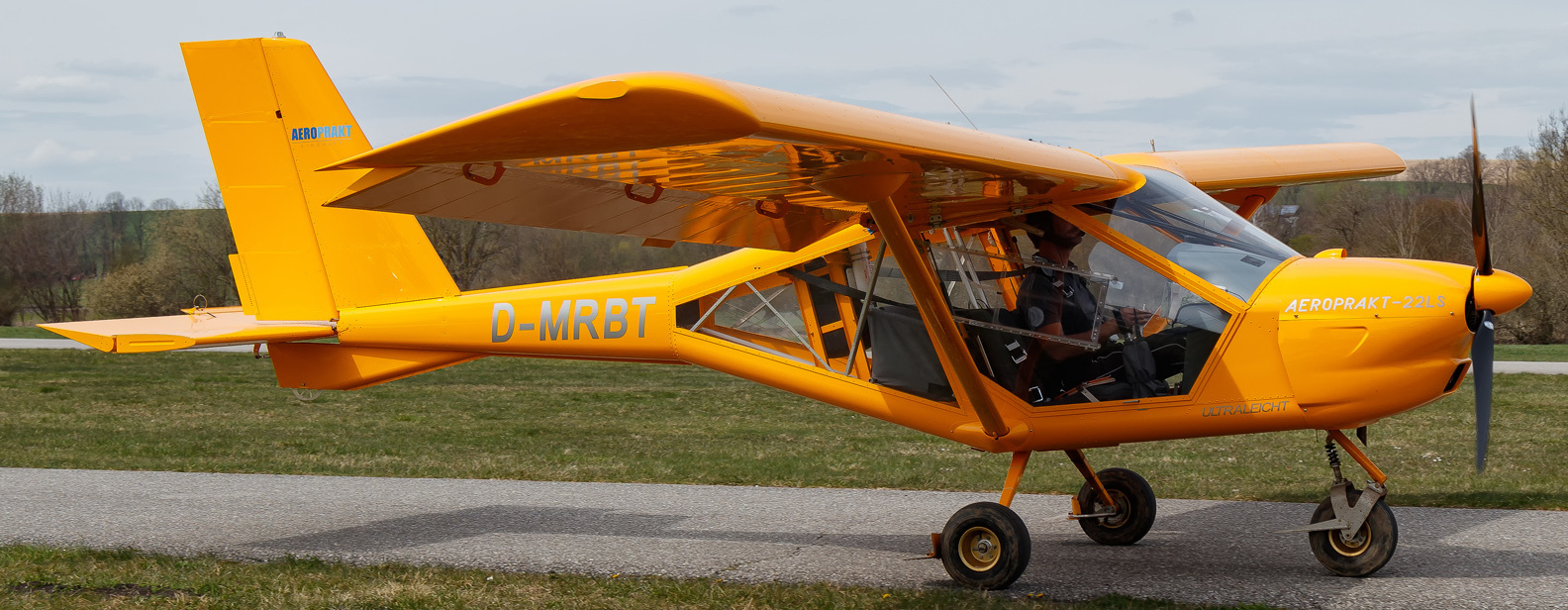
The circuit is the part of the flight with the most traffic in the smallest space – and the part where the least needs to be said. A position report consists of two things: who you are and where you are. Anything else costs frequency time.
The five legs
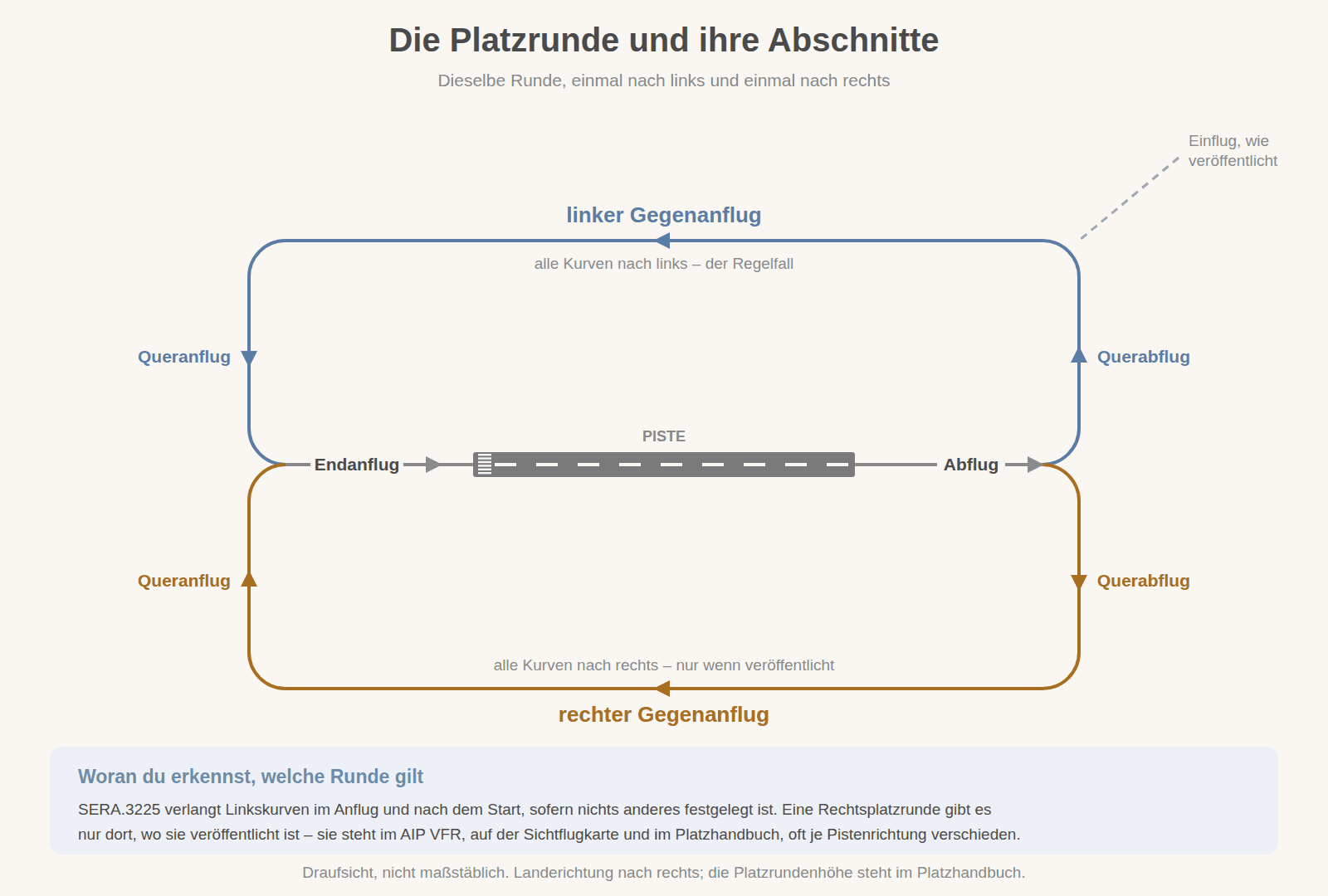
The circuit has fixed names, and they are the same throughout Germany. After take-off comes the upwind leg, straight ahead in the runway direction. The first turn leads into the crosswind leg, across the runway. The second into the downwind leg, parallel to the runway against the landing direction – this is the longest leg and gives you the best view of the airfield. The third turn brings you onto the base leg, again across the runway, and the fourth onto final, lined up with the runway.
Upwind and final lie on the same line, the extended runway centreline. That is why they are grey in the sketch: they belong to both circuits, the left-hand and the right-hand one.
Left-hand is the norm
SERA.3225 requires turns during the approach to land and after take-off to be made to the left unless otherwise specified. The left-hand circuit is therefore the normal case, which is why in a report simply "downwind" is often enough.
A right-hand circuit only exists where it is published – because of noise abatement, terrain or neighbouring airspace. It is shown in the AIP VFR, on the visual approach chart and in the airfield manual, and it can differ for each runway direction. Runway 07 left-hand, runway 25 right-hand is nothing unusual. If you do not know the airfield, look it up beforehand; if in doubt, say in your report which side you are flying: "left-hand downwind".
What a position report looks like
The full radio call answers four questions: whom am I calling, who am I, where am I, what do I want. In the circuit two of them drop out.
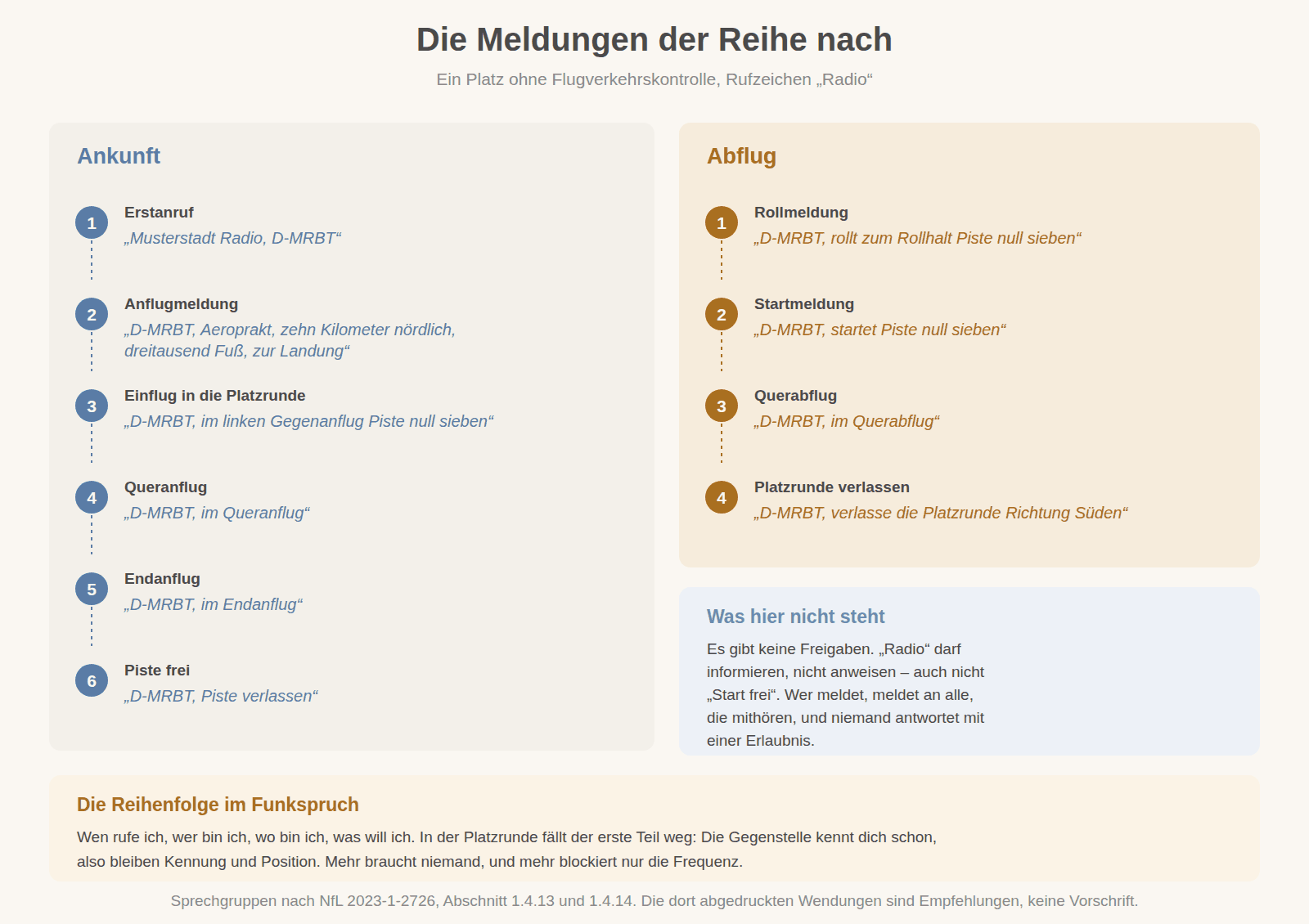
Callsign, then position. Nothing more. "D-MRBT, base" is a complete report. The station already knows who you are and what you intend to do; the others in the circuit only need to know where you are right now.
Arrival: from outside into the circuit
The first call comes early enough for you to listen calmly to what else is going on – about ten kilometres before the airfield. Then comes the approach report with type, position, altitude and intention. The position refers to a known point or a compass direction with distance, not to coordinates.
When joining the circuit, you say which leg you are joining and for which runway. After that the short reports are enough: base, final. After touchdown and vacating the runway you report that as well – whoever is behind you on final is waiting for exactly that sentence.
Departure: out of the circuit
Before taxiing the taxi report, before lining up the departure report. If you stay in the circuit to practise landings, you keep reporting every leg. If you leave, you say where you are leaving the circuit and in which direction. That way everyone knows the circuit is free again.
At an airfield with a tower it is different
At a controlled airfield you do not report every leg on your own initiative; air traffic control requests the reports: "report downwind", "report final". In addition there are clearances, which are read back, and instructions such as "number two, follow the Cessna on downwind" or "make a short approach". Anyone who reports every position unasked there is talking over others.
At an airfield with the callsign "Radio" it is the other way round: there is no one to request or clear anything. Your reports are addressed to everyone listening. What the ground station may and may not say is on the page At the Airfield: "Radio" instead of "Info".
Three mistakes you often hear
- Too much. "D-MRBT is now on downwind for runway zero seven for landing with a subsequent full stop" – nobody needs more than the first five words of that.
- Too late. The report belongs at the beginning of the leg, not at its end. If you only report in the last third of the downwind leg, it no longer helps anyone with sequencing.
- Too vague. "On approach" is not a leg. Downwind, base and final are three different places with three different conflicts.
Basis: SERA.3225 of Regulation (EU) 923/2012 for the direction of turns, NfL 2023-1-2726 sections 1.4.13 and 1.4.14 for the phraseology. The phrases printed there are recommendations. The published circuit and the airfield manual of the respective airfield are binding.