A radio call is not a conversation but a form to be spoken. Four items in a fixed order, short, without pleasantries. If you stick to it, you will be understood – and you will not block the frequency for others.
The four questions
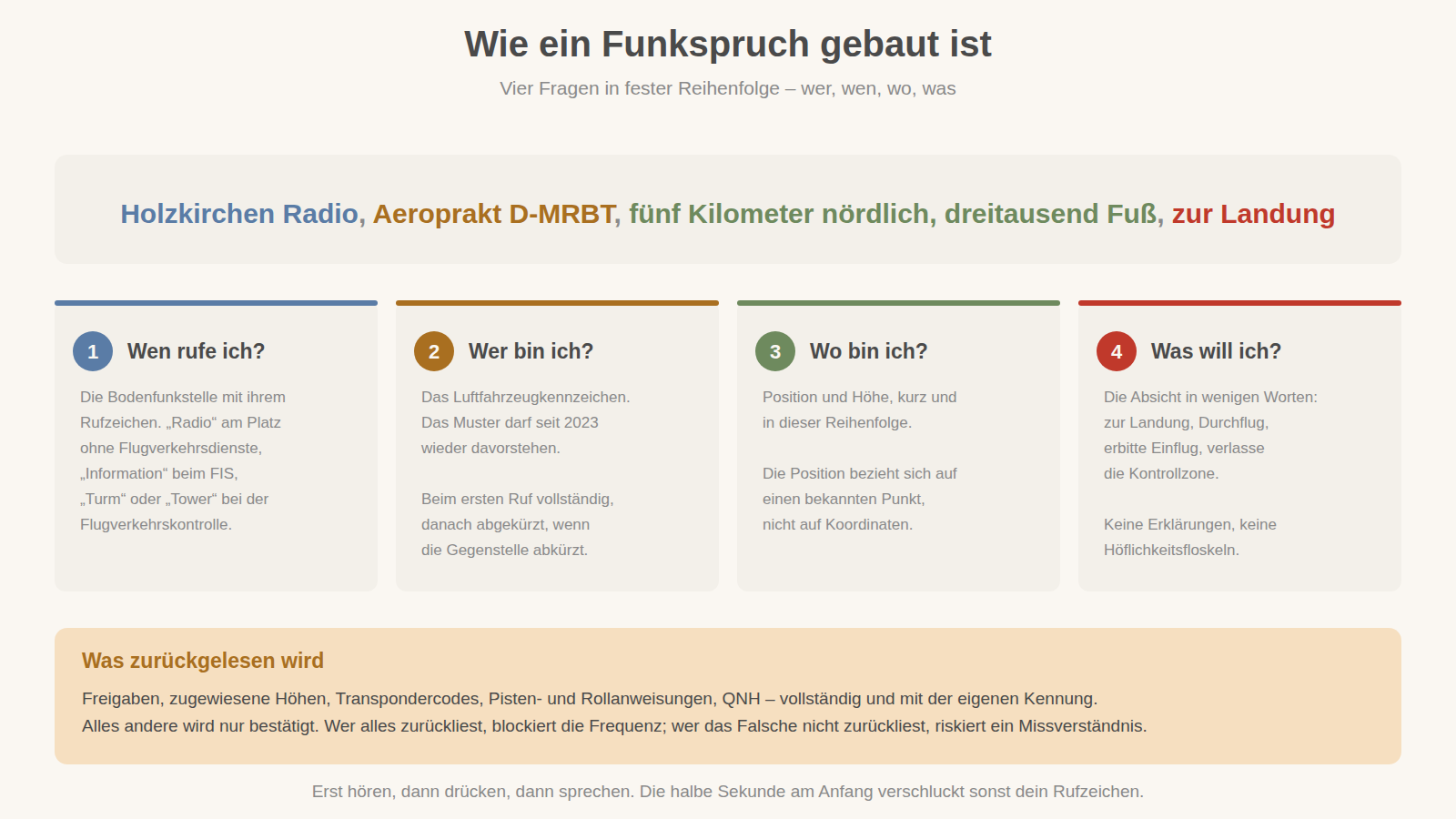
- Whom am I calling? The callsign of the station comes first so that it knows it is being addressed.
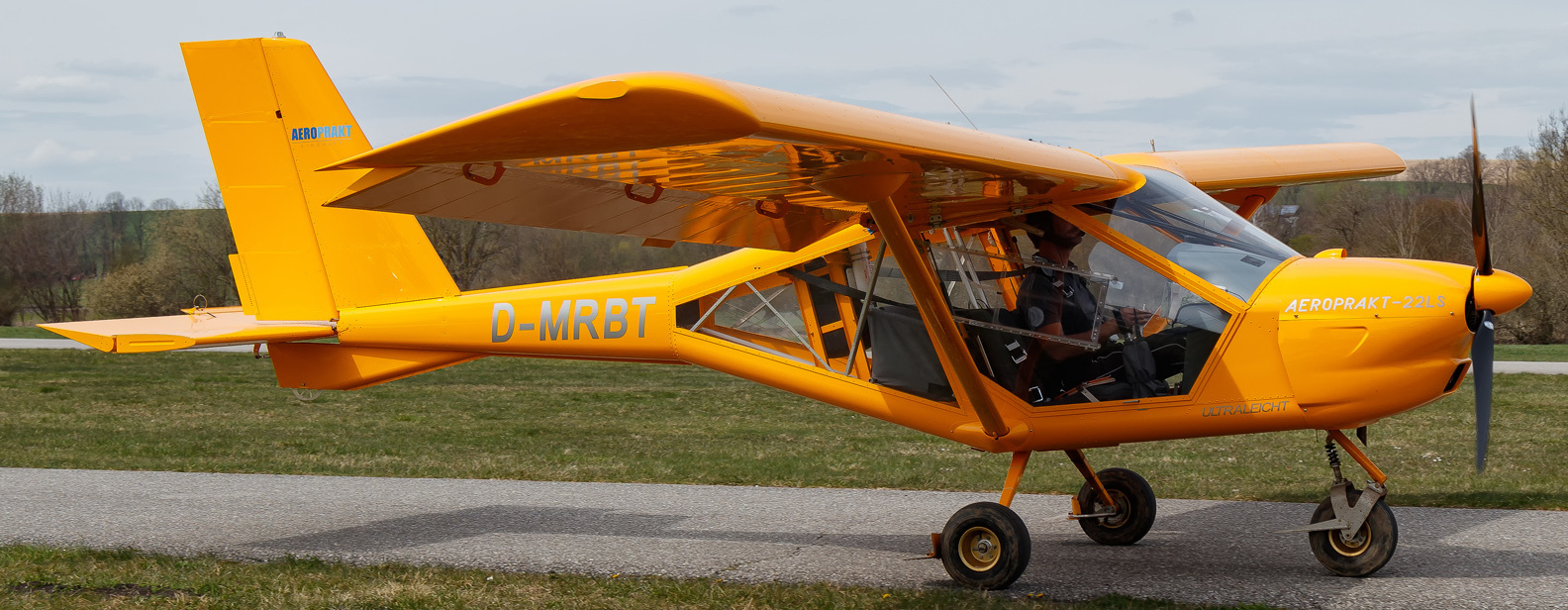
- Who am I? The aircraft registration. Since the revised radiotelephony procedures of 2023 the type may precede it again – so "Aeroprakt D-MRBT" is correct again.
- Where am I? Position and altitude, in this order, relative to a known point.
- What do I want? The intention in a few words.
What is read back
Not everything is repeated, but the important items are read back in full and with your own callsign: clearances, assigned altitudes, transponder codes, runway and taxi instructions, the QNH. Everything else is acknowledged briefly. Reading back everything clogs the frequency; leaving out the wrong thing produces exactly the misunderstanding that reading back is meant to prevent.
A few habits that help
- First listen, then press, then speak. The transmit button needs a moment; if you start talking immediately, you lose your own callsign.
- Think first, then speak. Have the call ready in your head before you press the button – that shortens it by itself.
- Numbers digit by digit. Altitudes and frequencies digit by digit so that they are not misheard.
- Asking again is allowed. "Say again" is a normal radio call and nothing to be embarrassed about.
What this means for a flying day
- Listen in briefly before your first call. From the ongoing traffic you learn the landing direction and what is going on without asking.
- Prepare your first call, especially at an unfamiliar airfield or in a foreign language.
- When unsure, slow and complete is better than fast and abbreviated. Being understood matters more than sounding slick.
Remember
Whom, who, where, what – in this order. And everything that commits you to something is read back.